AI Finds a Blind Spot in Earnings Expectations
AI analysis reveals where price behavior diverges from earnings expectations - and why that gap has historically mattered for investors.
In partnership with

AI Found a Blind Spot in Earnings Expectations
Analysts haven’t caught up to this yet.
✍️ Editor’s Note
Most investors assume earnings expectations move before prices.
Historically, that’s been true.
But one advantage of AI-driven market analysis is spotting situations where price behavior quietly moves first - while expectations lag behind.
That’s what today’s issue is about.
What Will Your Retirement Look Like?

Planning for retirement raises many questions. Have you considered how much it will cost, and how you’ll generate the income you’ll need to pay for it? For many, these questions can feel overwhelming, but answering them is a crucial step forward for a comfortable future.
Start by understanding your goals, estimating your expenses and identifying potential income streams. The Definitive Guide to Retirement Income can help you navigate these essential questions. If you have $1,000,000 or more saved for retirement, download your free guide today to learn how to build a clear and effective retirement income plan. Discover ways to align your portfolio with your long-term goals, so you can reach the future you deserve.
🤖 What AI Models Look For
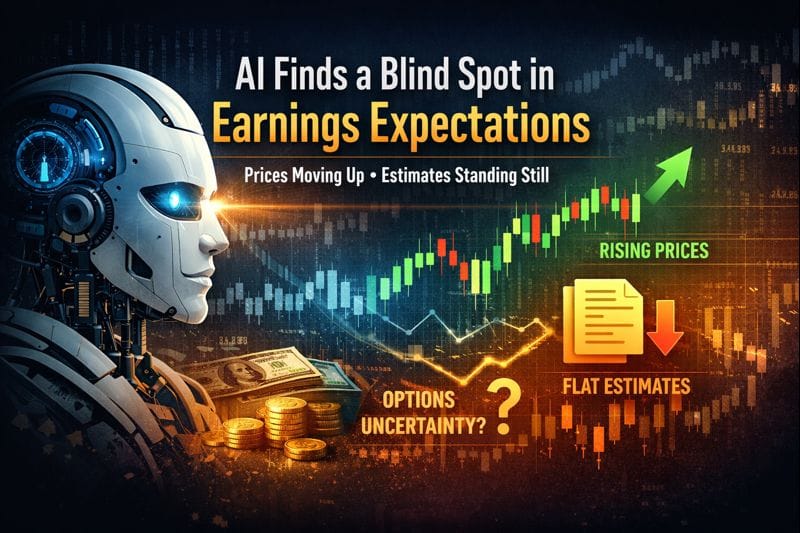
AI models designed to track price behavior versus earnings expectations often highlight an unusual disconnect when:
Prices stabilize or begin advancing ahead of estimate changes
Analyst forecasts remain flat or only marginally revised
Options markets quietly price higher forward uncertainty
In plain English:
The market can begin pricing something in before analysts adjust their expectations.
This setup doesn’t appear often - but historically, when it does, it has tended to matter.
📊 Why This Matters More Than Headlines
Traditional earnings analysis focuses on:
Reported results
Forward guidance
Consensus revisions
AI looks elsewhere:
Pre-revision price compression
Post-earnings drift probabilities
The historical lag between price discovery and estimate updates
When that lag widens, markets have often transitioned into periods marked by:
Sharper estimate revisions
Catch-up price moves
Increased dispersion between winners and losers
This is where selectivity starts to outperform broad exposure.
🧭 How Investors Can Think About This
Environments like this have historically favored:
Stocks already acting as if earnings will improve
Businesses with operating leverage or margin sensitivity
Patience over prediction
They’ve tended to punish:
Blindly chasing earnings beats
Waiting for full consensus confirmation
Overreacting to single headlines
AI isn’t forecasting earnings numbers.
It’s highlighting where expectations and behavior may be misaligned.
🛠️ Want to Explore This Yourself? (AI Prompt)
If you want to explore this concept independently, try the following prompt:
Prompt:
“Identify stocks where price performance has improved over the past 8-12 weeks while analyst earnings estimates have remained flat. Analyze what historically happens when this divergence appears.”
✅ How to Verify the Results
Compare price charts with earnings estimate trends
Check estimate revisions across multiple platforms
Look for confirmation via options implied volatility
Study prior earnings cycles that showed similar divergences
Consistency across sources is what strengthens confidence in the signal.
🔐 Why This Fits the Vault Philosophy
Most investors wait for confirmation.
AI helps you notice where confirmation has historically followed behavior, not preceded it.
The goal isn’t prediction - it’s awareness and positioning.
That’s how you stay early without being reckless.
Vaulting Your Wealth Forward,
– T. D. Thompson
P.S. Some of the largest earnings-driven moves in history began before estimates changed. AI simply helps surface when that gap has mattered before.
AI Investing Vault
The content above is for educational and informational purposes only and does not constitute financial advice or a solicitation to buy or sell any financial instruments. Trading and investing involve significant risk of loss, and past performance is not indicative of future results. Always consult with a licensed financial advisor or conduct your own research before making any investment decisions. Use of AI tools and strategies mentioned above is at your own discretion and risk. AI Investing Vault may receive compensation if you purchase tools or services mentioned in this email, at no additional cost to you.